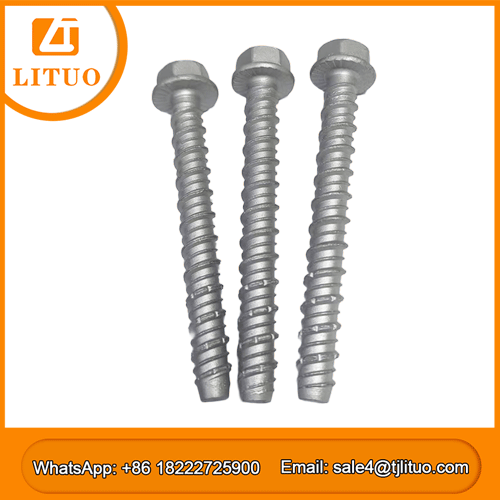
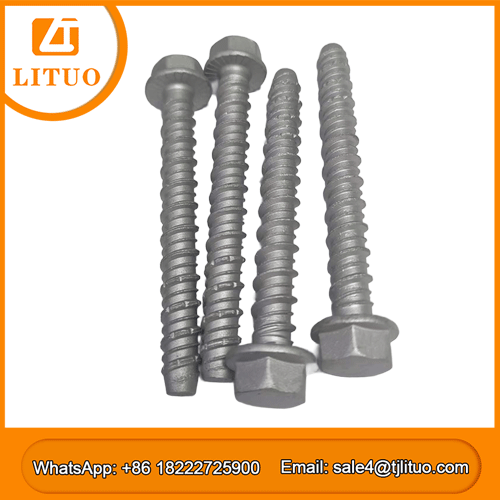
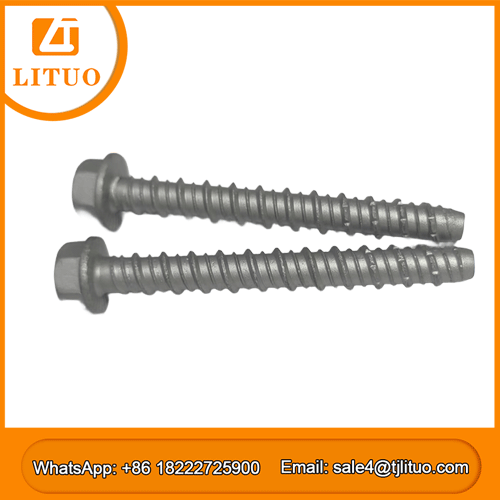
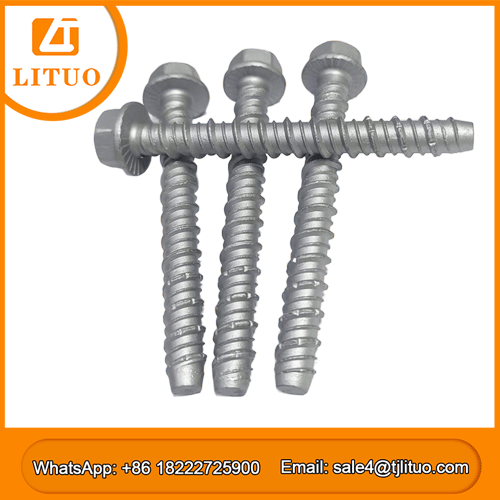
Hexagonal cement bolts are bolts used on rigid foundation materials such as cement. They typically consist of a threaded shank and a hexagonal head. The threaded shank engages tightly with the cement, providing a secure hold. Widely used in construction projects such as steel structures, bridges, and tunnels, they are frequently used to support and connect different components, ensuring structural stability.
They offer good installation stability, employing through-hole and pre-insertion installation methods. After insertion, the threads embed into the concrete, achieving a tight fixation. For example, in some construction projects, they can securely install angle steel, machinery, and other equipment onto concrete foundations.
They have strong anti-loosening capabilities. Cement bolts with hexagonal flange heads are suitable for installing rigid components such as angle steel and machinery, providing a certain degree of anti-loosening effect and ensuring installation reliability.
Hexagonal cement bolts are available with various surface treatments, commonly including galvanized carbon steel and heat-treated surfaces. Heat-treated surfaces are suitable for outdoor and humid environments, preventing rust and corrosion and extending service life.
Common performance grades include 4.6, 8.8, and 10.9. The higher the performance grade, the greater the strength of the bolt. For example, a 10.9 grade hexagonal cement bolt, after heat treatment, has a nominal tensile strength of up to 1000 MPa, and can withstand greater tensile and compressive forces.