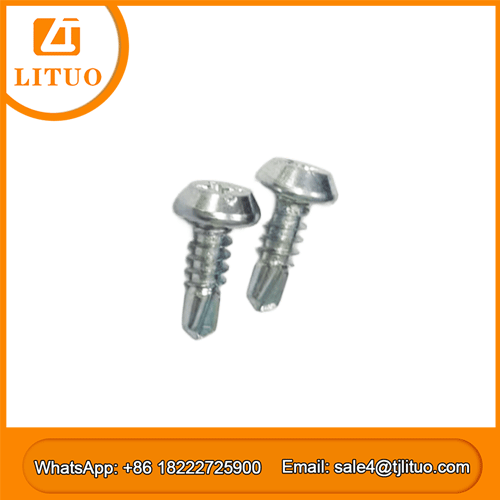
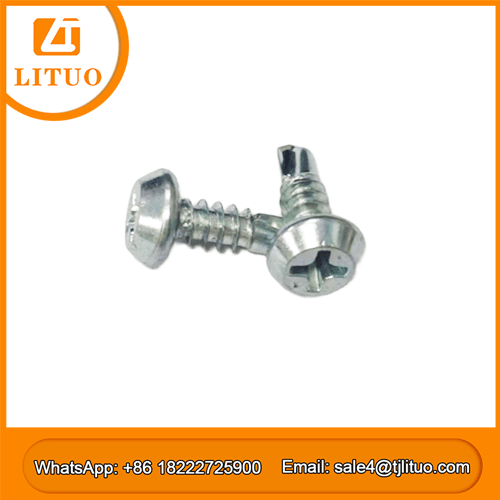
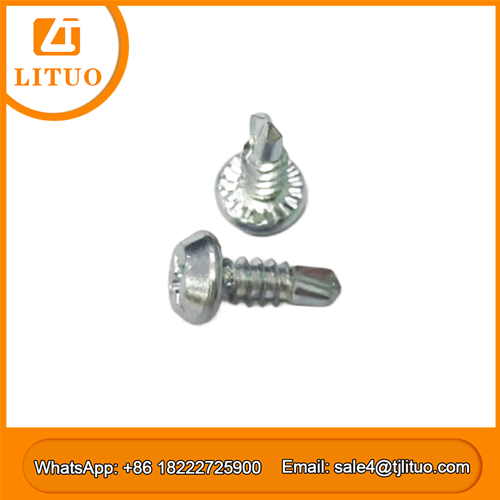
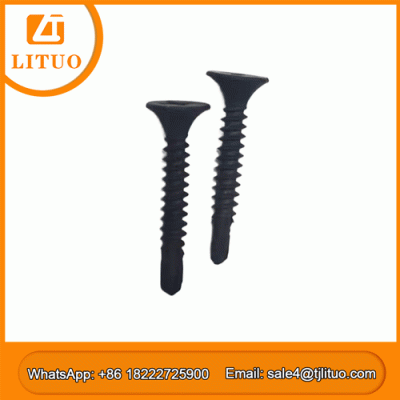
The pan framing head self drilling screw is a type of screw with an oversized washer (resembling a bee's wing) on the head and a sharp twist drill bit at the threaded end. It allows direct penetration of hard materials like metal without pre-drilling, completing drilling, tapping, and tightening in a single operation. This "drill-and-tighten screw with an oversized washer" is specifically designed for high-efficiency fastening scenarios requiring large-area tightening and direct penetration of hard materials.
It features a large, one-piece-molded flat washer, resembling a bee's outstretched wings. This provides a good clamping area while distributing tightening pressure.
The washer base is typically serrated or knurled, allowing it to engage with the material being fastened (such as corrugated steel sheets) during tightening, playing a crucial role in preventing loosening, rotation, and providing a waterproof seal.
The material is generally C1022A carbon steel or alloy steel to withstand the high torque and hardness during drilling. Stainless steel (such as 410) is also available for highly corrosive environments.
Surface treatment determines weather resistance: standard galvanizing provides basic rust prevention.
Dacromet is extremely common and important. Offering superior rust protection (salt spray testing for hundreds of hours or more), it's a standard treatment for outdoor steel structures (such as roofs and wall panels), and comes in silver-gray or dark gray.
Working Principle:
High-efficiency penetration: The drill bit, like a drill tip, directly drills through the underlying structure (such as steel purlins), eliminating the need for pre-drilling.
Strong fastening: The self-tapping threads form a tight fit with the drilled hole, providing high tensile and shear strength.
Extra-large compression and sealing: The large "bee" washers evenly distribute the fastening force over a large area of the upper material (such as corrugated steel sheets), perfectly preventing the screw heads from tearing through thin sheets due to wind pressure, vibration, or thermal expansion and contraction. Simultaneously, its serrated design seals the drilled hole, preventing leaks.
Main Application Scenarios
Metal roofing systems: Directly fixing metal roofing panels such as standing seam panels, concealed fasteners, and corrugated steel sheets to steel purlins. This is its most classic and primary application.
Metal wall cladding systems: For fixing metal wall panels.
Cold storage panels and cleanroom panels: For fixing sandwich panels.
Installation of large outdoor signage and steel structure fencing.
Any application requiring the fastening of thin metal sheets to a metal frame with high requirements for sealing, preventing loosening, and preventing tearing.