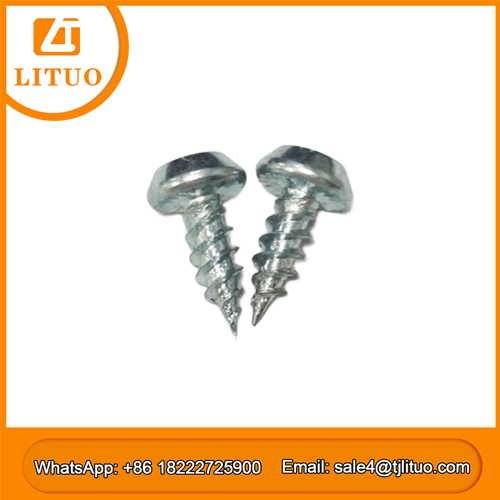
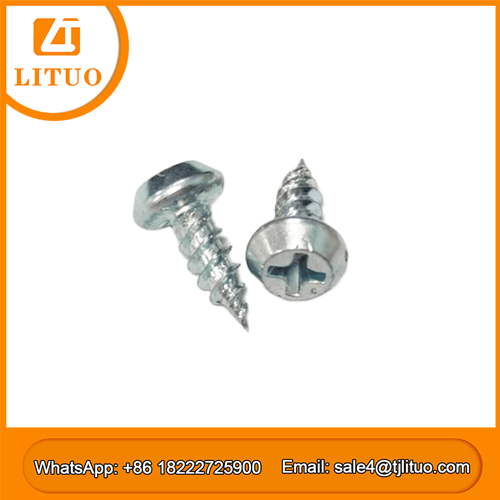
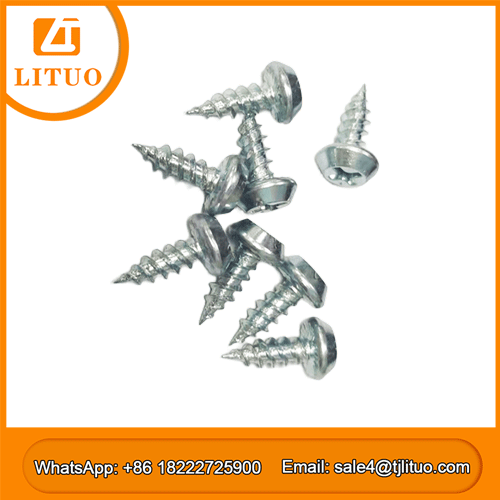
The pan framing head self tapping screw is a pan head self-tapping screw with a large flat washer integrated into the head. The washer and head are integrally stamped, making it very secure.
Pan framing head screw -"Little Bee": This name comes from the fact that its large washer resembles a bee's outstretched wings, while the screw head in the center resembles the bee's body.
It is also commonly referred to as a "large washer head/large washer head self-tapping screw" or simply categorized under "pan head self-tapping screws with washers." The washer is exceptionally large, allowing for better coverage and sealing of larger mounting holes or uneven surfaces. The bottom of the washer is usually flat, and sometimes it has anti-slip teeth to increase friction and prevent slippage or damage to soft material surfaces during tightening.
The head is generally a pan head or semi-countersunk head, but the diameter of the head itself is concealed by the large washer underneath. Washers distribute tightening pressure over a wide area, effectively preventing the screw head from "sinking" or being pulled through soft materials such as: plastic parts (e.g., PVC boards, plastic water tanks, turnover boxes) and wood panels (especially fragile materials like MDF and particleboard).
This is the essence of the "Little Bee" name. The washer diameter is much larger than that of a standard pan head screw, typically three times or more the screw diameter.
Standard self-tapping threads with a guide tip are used for self-tapping on materials such as plastics, thin metals, and wood. The thread pitch is wide, the thread profile is sharp, and the penetration ability is strong.
Materials are generally common carbon steel C1022A and stainless steel (such as 304, for outdoor or corrosion-resistant environments).
Carbon steel is often treated with "color zinc" (yellow zinc, blue-white zinc) plating, which is both rust-proof and aesthetically pleasing.
Main Application Scenarios
* The Little Bee screw is widely used in situations requiring "large-area tightening" and "prevention of material damage":
* Advertising Signage Industry: Fixing PVC letters, acrylic sheets, and lightbox panels to back panels.
* Automotive Modification and Interior Design: Fixing car carpets, interior panels, bumpers (partially), mudguards, etc.
* Home Appliance and Chassis Assembly: Fixing plastic casings, large plastic parts inside appliances, computer chassis side panels, etc.
* Woodworking and Furniture: Installing hinges and fixing shelves to cabinets (especially when edge protection of boards is required).
* Greenhouses and Agricultural Shelters: Fixing plastic film and polycarbonate sheets.