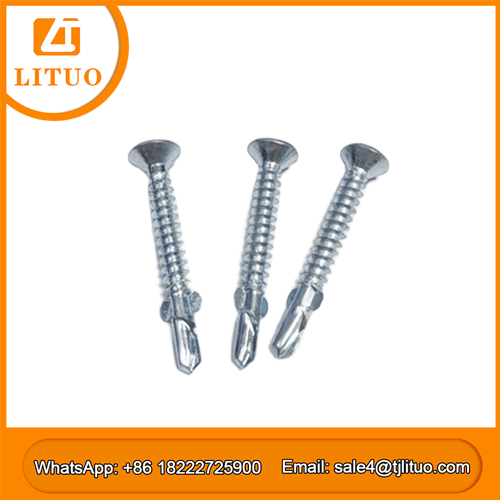
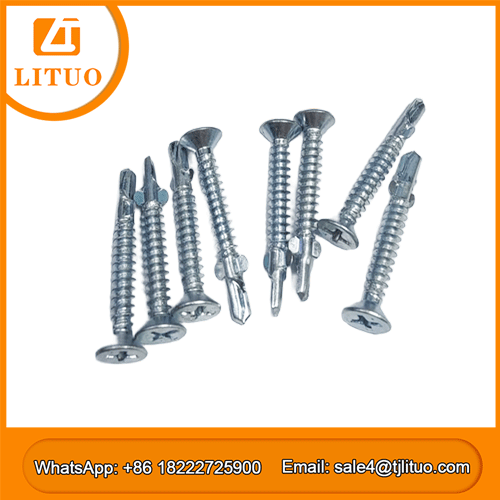
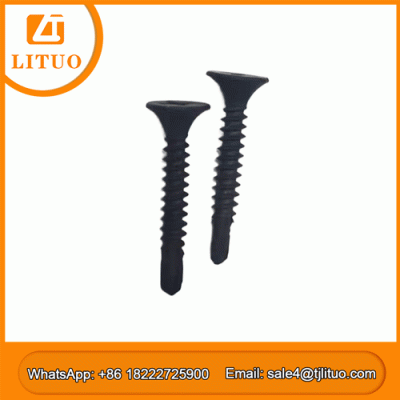
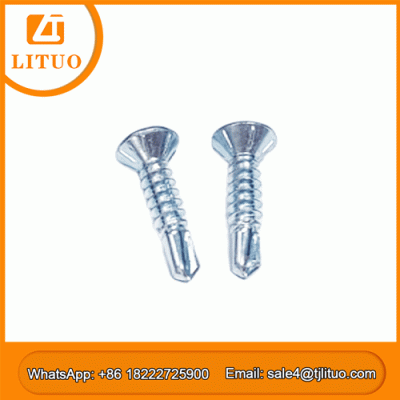
A countersunk head screw with wings is a type of countersunk screw with an integrated "ear" (or flange, gasket) under the head. It is a widely used and efficient fastener; this "ear" is typically a round or square protrusion, and its key function is to firmly "clamp" or "press" the object to be fixed (such as steel plate, insulation cotton, metal mesh, etc.) before the screw is recessed into the material, thus completing the final countersunk tightening.
In use, the screw passes through the object to be fixed (such as a color steel plate) and screws into the substrate (such as a steel structure purlin). The chuck first contacts the surface of the color steel plate.
Clenching: With continued rotation, the chuck begins to apply a large downward clamping force to the object being fixed, firmly pressing it against the substrate. This process provides the main anti-loosening and sealing function.
Countersunk and Final Tightening: Once the chuck is fully clamped, the countersunk portion begins to enter the pre-punched or self-drilled tapered hole in the object being fixed until the upper surface of the head is flush with the material, completing the final fixation.
Key Advantages
Superior Clamping Force and Anti-Loosening: The integrated large clamp provides a large clamping area and pressure, effectively resisting vibration and wind pressure, preventing the fixed object (especially flexible materials) from loosening or rotating.
Sealing and Waterproofing: The large clamp clamps press and cover holes in the fixed object, effectively preventing moisture and dust from seeping in through screw holes.
Protecting Fixed Materials: Distributes clamping pressure, preventing thin sheets or fragile materials from tearing or denting at the fastening point.
One-Step Installation: Integrates the gasket/clamping function with the screw, eliminating the need for additional parts during installation and improving efficiency.
Application Scenarios
This is one of the most critical fasteners in metal roofing and wall systems.
Fixing Roofing/Wall Panels: Fixing profiled metal sheets such as corrugated steel sheets and aluminum-magnesium-manganese sheets to the underlying steel structure (purlins, crossbars). The clamp firmly presses down on the crests or troughs of the ribs.
Fixing Insulation/Waterproofing Membrane: Used to fix the internal insulation or waterproofing layer in composite panel systems.
Fixing Other Accessories: Such as fixing roof gutters, decorative panels, metal mesh, etc.
Materials and Surface Treatments: Commonly used materials include C1022A carbon steel and stainless steel (A2-304, A4-316): used in highly corrosive environments (coastal areas, chemical plants, food factories).
Surface treatments are generally galvanized (blue-white, color zinc), economical and versatile, providing rust prevention.
Epoxy Resin Coating/PVDF Coating: In addition to corrosion protection, it offers colors matching the roof panels (such as white, dark gray), is aesthetically pleasing, and weather-resistant.
Machine Galvanizing/Dacromet: Provides the highest level of corrosion protection.